Research for Home Health Aides: making lives of caregivers better by identifying gaps and opportunities
A mobile application design for caregivers working in home health. The research focused on understanding caregiver workflows, identifying pain points and transformational opportunities through user interviews, personas, and journey mapping.
Client: A technology company leading the movement for intelligent, coordinated care experiences.
Aim: Making lives of Home Health Aides (HHAs) better by identifying gaps and opportunities in their daily workflows.
Target Application: A mobile application design for caregivers working in home health.
A home health aide provides most of the same services that a certified nurse's aide or a medical assistant might do, but they perform these duties from inside of the patient's own home. This gives the patients more privacy, comfort, and dignity.
User interviews with batches of 5–6 caregivers.
Industry analysis, HHA role study, and motivations vs challenges.
Behavioural archetypes from research data.
Day in the life mapping of caregiver workflows.
Thematic analysis reports and design recommendations.
User centric research on how a day in the life of a caregiver who is attending multiple patients looks like. From waking up in the morning to checking in for a schedule, patients lined up for the day, activities they perform between visits, documenting visits, and more.
There were semi structured interviews with batches of 5–6 caregivers. My role was to conduct a thematic analysis of all the user interviews and come up with a summary report.
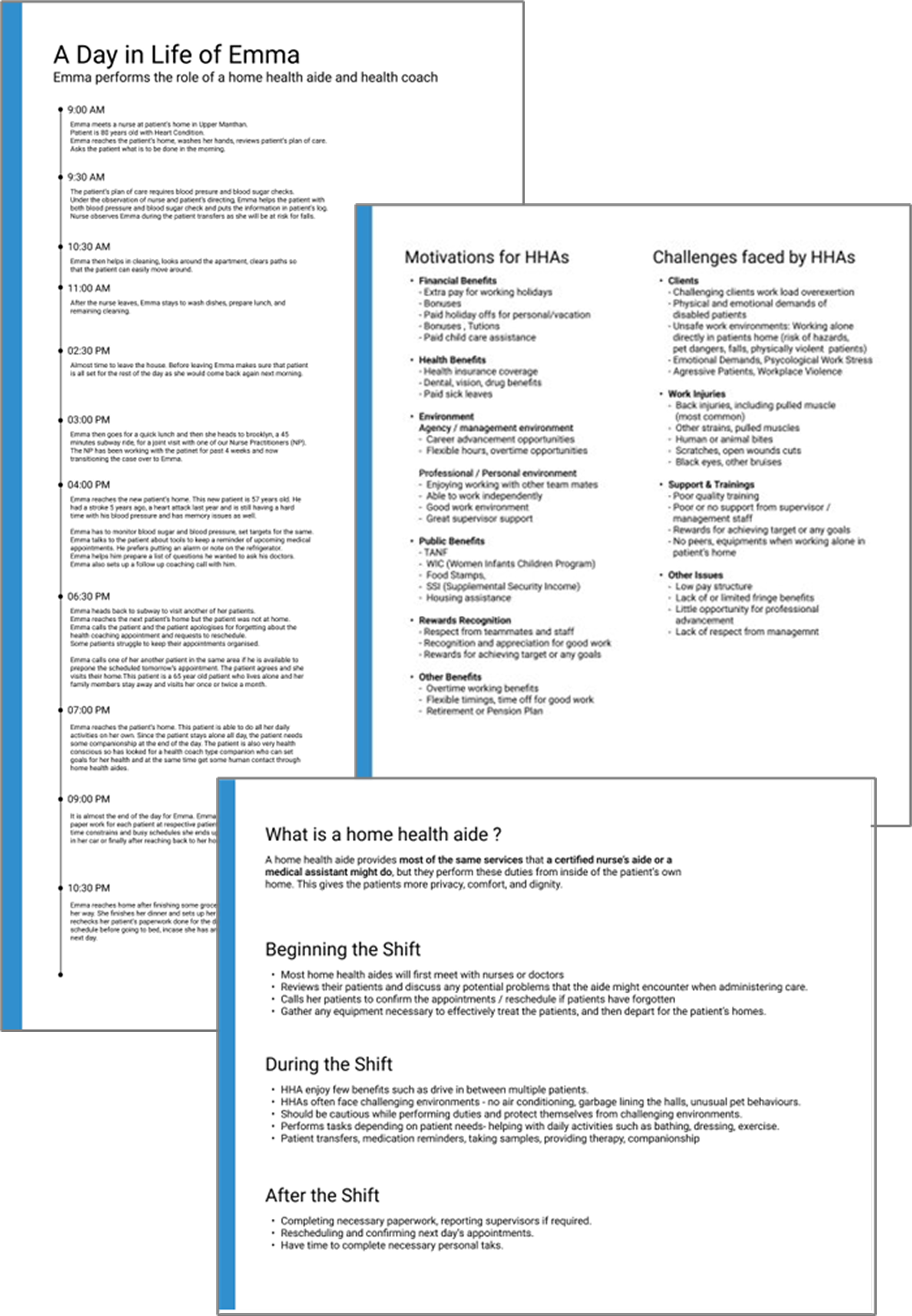
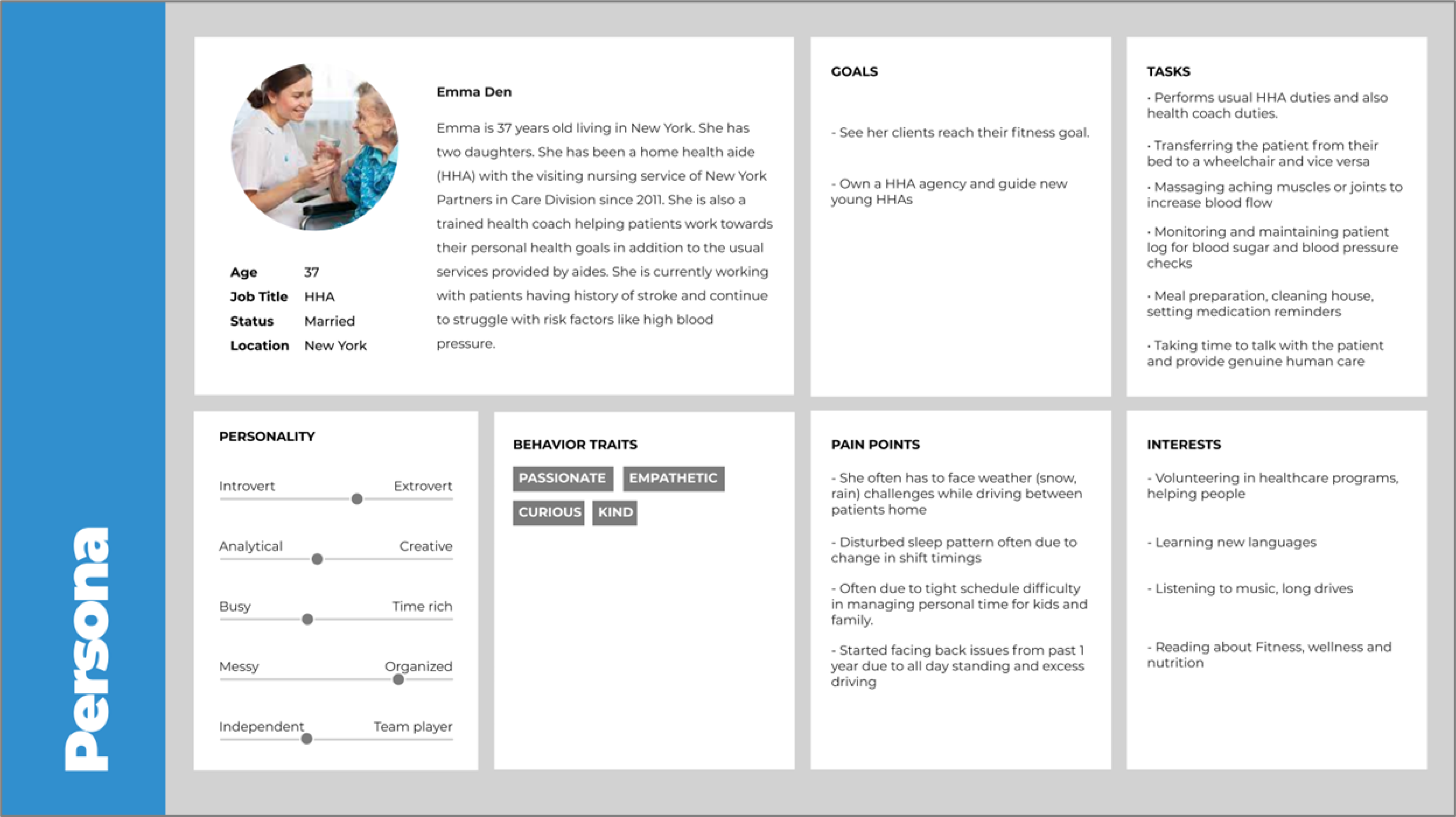
As part of secondary research, and in order to build empathy with caregivers using this application, we created a user persona for HHAs to understand more of their behaviour and needs.
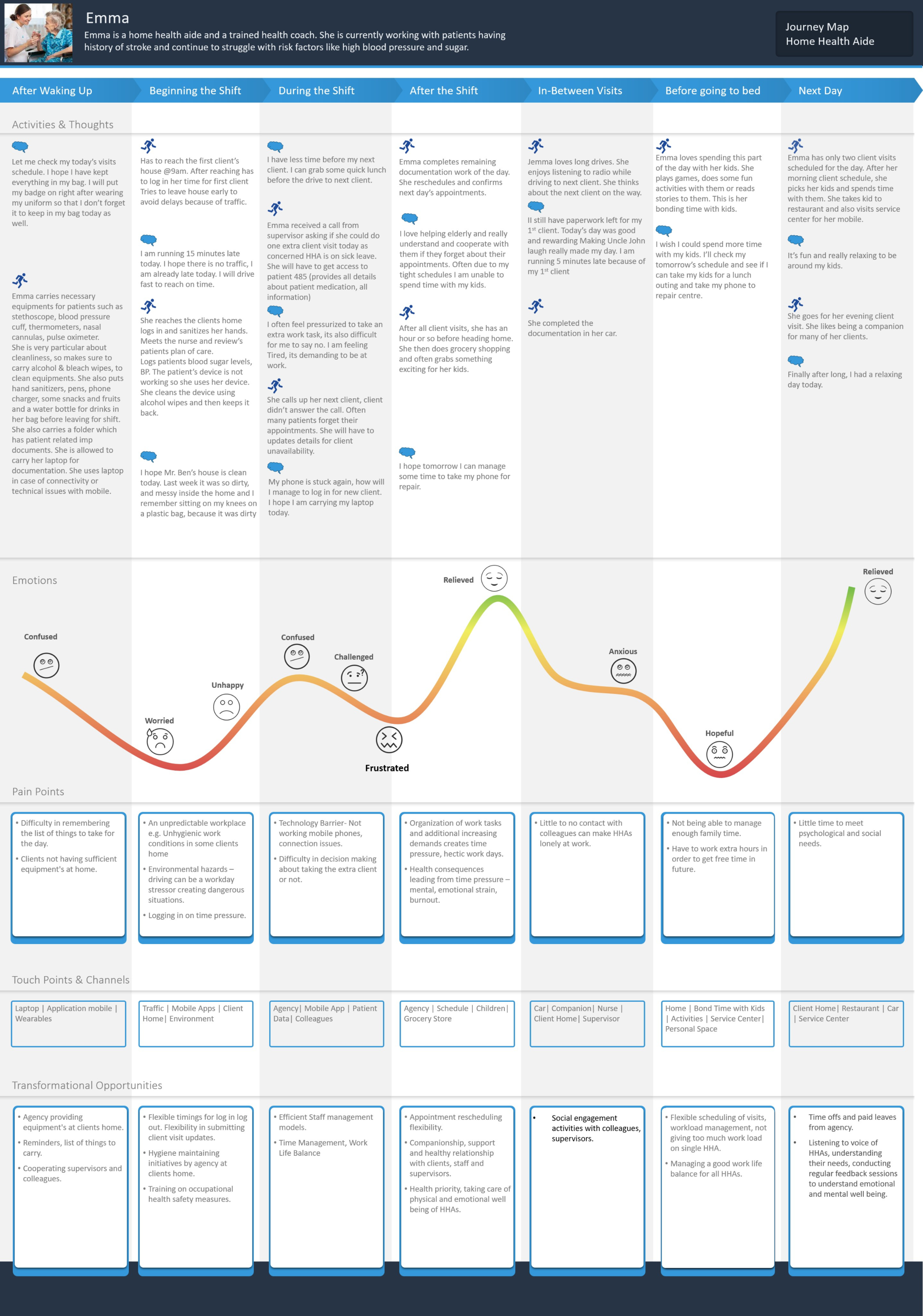
We created a customer journey map to build a better understanding of how a detailed day in the life of a caregiver looks like. We examined stages such as after waking up, beginning the shift, during the shift, after the shift, in between visits, before going to bed, and the next day.
Across the day, Emma's emotions fluctuate from confused and worried at the start, through frustrated and challenged during the shift, to relieved during visits, anxious in between, hopeful before bed, and finally relieved at the end of the day.
Difficulty remembering things to carry. Clients not having sufficient equipment at home.
Technology barriers, unhygienic conditions, difficulty in decision making about extra clients.
Increasing demands create time pressure. Health consequences from mental and emotional strain.
Not enough family time. Having to work extra hours. Little time for psychological and social needs.
Agency providing equipment at client homes. Reminders and lists of things to carry.
Flexible timings for log in. Hygiene initiatives by agency. Training on health safety measures.
Appointment rescheduling flexibility. Companionship and healthy relationships with clients, staff, and supervisors.
Flexible scheduling of visits, workload management. Listening to HHA needs through regular feedback sessions.
More Work